Precision Metrics in Space Exploration
From the chemical secrets of molecular clouds to the navigation of asteroids, the pursuit of space science is a study in incremental precision.
The Long Calibration
The history of space exploration is often told as a succession of grand arrivals, yet the reality is a slow, iterative accumulation of data. From the 1960s, when the OGO-V satellite first identified the bow shock of the solar wind, to the modern era of the James Webb Space Telescope, the objective has remained consistent: to refine our understanding of the chemical and physical environments that define our neighborhood and the wider cosmos. This process is rarely about a single moment of discovery, but rather the persistent, often quiet, refinement of how we measure the invisible.
The history of space exploration is a slow, iterative accumulation of data.
Chemical Inventories in the Dark
In the cold, dark molecular clouds of our galaxy, the ingredients for habitable worlds are being synthesized on the surfaces of dust grains. Recent observations of the Chamaeleon I cloud reveal that methanol ice forms primarily through the hydrogenation of carbon monoxide, a process that requires specific gas densities and timescales to manifest. By comparing these findings with the ice inventories of nearby protostars like Ced 110 IRS4, researchers are mapping the chemical heritage of star formation. These icy reservoirs are not merely static deposits; they are dynamic chemical laboratories where thermal processing and complex interactions create the precursors for planetary life.
Navigating Irregular Gravity
As we look further afield, the challenges of navigation and observation grow exponentially. For missions targeting small bodies like the asteroid 433 Eros, the difficulty lies in managing fuel-optimal maneuvers within irregular gravity fields. New computational frameworks, such as physics-informed Bayesian optimization, now allow for more reliable trajectory planning, enabling probes to hop across surfaces with unprecedented precision. Simultaneously, the development of diffractive sails offers a way to rethink interplanetary transfers, turning the problem of transit into a matter of calculating reachable sets under arbitrary dynamics.
The challenge of navigation is to manage fuel-optimal maneuvers within irregular gravity fields.
The Distributed Frontier
The hardware required to sustain these efforts is undergoing a parallel miniaturization. NASA’s focus on nano-satellites—weighing no more than 10 kilograms—aims to provide simultaneous measurements from multiple vantage points, drastically reducing the cost and complexity of constellation missions. These small craft, equipped with autonomous systems and radiation-hardened electronics, represent a shift toward distributed science. When combined with advanced observational tools like the proposed EXPO observatory, which seeks to expand X-ray polarimetry into the hard X-ray domain, the capacity to monitor transient events and high-energy phenomena becomes significantly more robust.
Reflections on the Lunar Surface
Closer to home, the Moon continues to serve as both a target and a mirror. The Chang'e-6 mission, which returned samples from the lunar farside, has provided a new window into the thermal and geochemical evolution of the lunar crust. Meanwhile, relics of earlier missions, such as the Soviet Lunokhod 1 rover, remain useful. By bouncing lasers off these long-dormant robots, scientists can track minute orbital deviations, probing the Moon’s composition and testing fundamental gravitational theories. Whether through the analysis of ancient basaltic regolith or the repurposing of 1970s hardware, the Moon remains a vital site for testing our reach.
The Precision of the Search
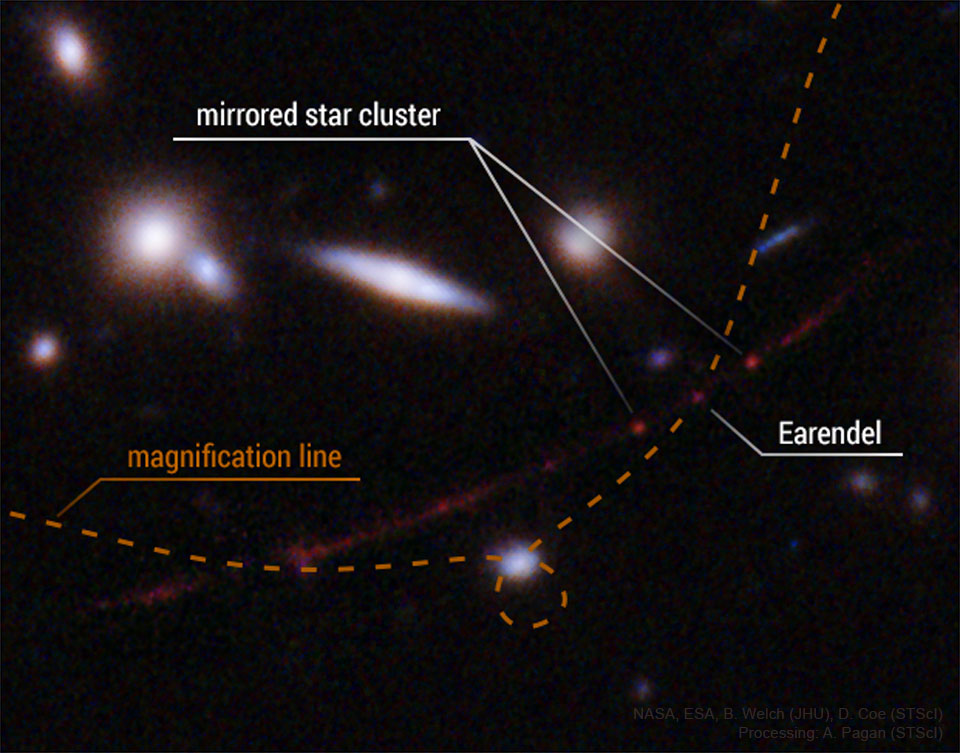
The ultimate goal remains the identification of habitable environments beyond our solar system. New algorithms like MARA are now being designed to process the extreme precision of microarcsecond astrometry, allowing us to detect rocky planets in the habitable zones of nearby binary stars. This search, coupled with our ability to observe the farthest reaches of the early universe through gravitational lensing, defines the scope of modern astrophysics. It is a field defined by the tension between the vastness of the target and the precision of the tool, a pursuit that demands both patience and technical ingenuity.