Cosmic Synthesis Through Digital Arrays
Modern astronomy is less a matter of looking and more a matter of synthesis, weaving disparate signals into a coherent map of the invisible.
The Statistical Filter
The history of observation is often told as a progression of sharper glass and larger mirrors. Yet, the contemporary reality of the field relies on the quiet labor of statistical inference. Consider the Pristine survey, which seeks to identify the most metal-poor stars in our galaxy. Rather than examining every star individually with high-resolution spectroscopy, researchers utilize photometric metallicities derived from Gaia’s synthetic catalogues. By isolating specific calcium-sensitive wavelengths, they can filter through millions of candidates to find the rare, ancient relics of the early universe. This is not merely a search for light; it is a search for chemical signatures that reveal the history of galactic mergers and the debris of long-dead streams.
Observation is no longer a solitary act of sight, but a disciplined exercise in statistical extraction.
Deep Time and Distant Light
When we look toward the furthest reaches of the cosmos, the challenge shifts from selection to sensitivity. The MIRI Deep Imaging Survey, utilizing the James Webb Space Telescope, demonstrates how deep-field integration—spanning over 40 hours of exposure on a single filter—allows us to peer into the rest-frame infrared of galaxies at extreme redshifts. By capturing light that has been stretched by the expansion of the universe, researchers can characterize mature stellar populations in epochs previously hidden from view. These images are not snapshots in the traditional sense; they are data-dense reconstructions that allow us to distinguish between the faint glow of distant galaxies and the inevitable noise of the detector.
The Mechanics of Growth
Sometimes, the most profound insights emerge from the intersection of different modalities. In the case of the starburst galaxy J1316+2614, researchers combined high-resolution imaging with spectral energy distribution analysis to reveal a rare, feedback-free mode of star formation. By measuring the leakage of Lyman-continuum photons, they identified a galaxy so efficient in its growth that it acquired the majority of its mass in a mere six million years. Such discoveries require more than a telescope; they require a multi-wavelength approach that accounts for gas, dust, and the energetic balance of the system itself.
The Patience of the Archive
The temporal dimension is equally vital. The study of hierarchical triple star systems, revisited by the TESS satellite, shows how long-term monitoring can reveal the subtle dynamical perturbations of stars orbiting one another over decades. By extending the baseline of observations initiated by the Kepler mission, astronomers can now identify longer-period systems that were previously invisible to shorter-term studies. This is the patience of the archive: the ability to return to old data with new tools, confirming the existence of complex orbital architectures that only reveal their true nature through the passage of time.
The true measure of a discovery is often found not in the initial flash, but in the long, steady accumulation of data.
Beyond the Visible
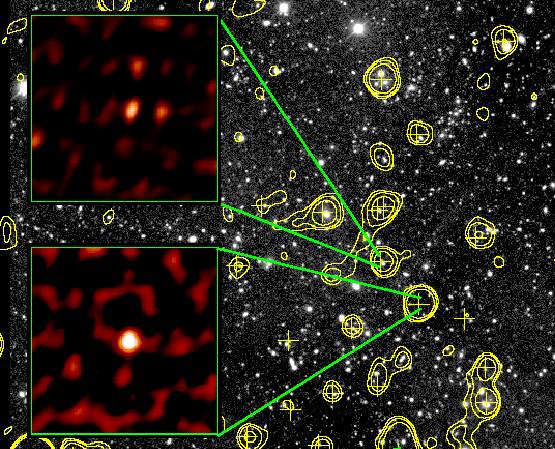
Ultimately, the frontier of astronomy lies in the synthesis of non-optical signals. Whether it is using Very Long Baseline Interferometry to map the radio-bright cores of distant galaxies, or the detection of high-energy neutrinos from blazar jets, the modern observer acts as a translator. We are learning to correlate the arrival of particles from the South Pole with gamma-ray flares detected by orbiting satellites, or using Doppler tomography to map the spiral structure of accretion disks around white dwarfs. These techniques allow us to visualize phenomena that are far too small, too distant, or too energetic to be captured by a traditional lens, proving that the most compelling views of the universe are those constructed from the invisible.