Particles in the Path of Light
From the localized turbulence of wind farms to the global reach of satellite monitoring, we are learning to read the atmosphere as a complex, reactive system.
The Visibility of the Invisible
The atmosphere is often perceived as an empty expanse, yet it is a crowded, shifting theater of particulate matter. From the black carbon of combustion to the salt spray kicked up by Pacific typhoons, the air is constantly populated by aerosols—tiny solid or liquid particles that dictate the quality of the light we receive. These particles are not merely passive passengers; they are active agents that shape the planet's energy balance. When ship exhaust meets water vapor, for instance, it creates bright, reflective streaks known as ship tracks. These human-made clouds, first documented in the 1960s, demonstrate how small-scale industrial output can alter the reflective properties of the sky on a regional scale.
The atmosphere is not a static container but a fluid, responsive medium that records the history of our interventions.
Turbulence and the Boundary Layer
The behavior of these aerosols is governed by the complex dynamics of the boundary layer, the lowest part of the atmosphere where the Earth's surface exerts its influence. In basins like the Sichuan in China, synoptic patterns—large-scale weather systems—create conditions that trap pollutants. When clouds form in these trapped air masses, they interact with the aerosols, reflecting solar radiation and further stabilizing the air. This feedback loop can reduce solar penetration by half and suppress the height of the boundary layer, effectively sealing the pollution in place.
This same boundary layer is the primary environment for wind energy, where the interaction between atmospheric turbulence and turbine arrays creates its own signature. By treating wind farms as massive sensor arrays, researchers can now model how power fluctuations ripple through a farm. These models rely on fluid dynamics to predict how turbulence is advected across a landscape, proving that the chaotic movement of air can be quantified and even harnessed for grid stability.
The Geostationary Perspective
Monitoring these processes requires a vantage point that matches the speed of the atmosphere itself. The Geostationary Environmental Monitoring Spectrometer (GEMS) represents a shift in how we observe air quality. By hovering over Asia, it provides hourly snapshots of nitrogen dioxide and formaldehyde, pollutants that fluctuate significantly throughout the day. Translating these satellite signals into accurate data is a rigorous exercise in calibration. Researchers must account for the specific viewing geometry of the instrument and the interference of clouds, which can obscure the column of air beneath them.
Recent refinements in retrieval algorithms have sought to improve the accuracy of these observations by replacing generalized cloud corrections with more precise, instrument-specific models. The challenge lies in the discrepancy between satellite measurements and ground-based sensors like Pandora or MAX-DOAS. While the satellite captures the macro-scale, the ground stations provide the necessary reality check, revealing that even the most advanced orbital instruments can overestimate pollution levels during the peak intensity of a winter day.
The Geometry of Intervention
As the climate warms, the temptation to intervene in atmospheric processes has moved from theoretical speculation to serious modeling. Sulfate aerosol geoengineering—the injection of sulfur dioxide into the stratosphere to reflect sunlight—is one such proposal. Simulations suggest that while this might lower global surface temperatures, it would fundamentally alter the composition of particulate matter. By increasing soil moisture and reducing wind speeds, such interventions could paradoxically decrease certain types of dust and sea salt aerosols, even as they increase the secondary organic aerosols that form in a cooler, chemically altered environment.
Dynamic attribution studies are now using counterfactual seasonal hindcasts to test these scenarios. By running models with and without specific forcings—such as CO2 or anthropogenic aerosols—scientists can isolate the impact of human activity on climate trends. These experiments reveal the limitations of our current models, particularly in their ability to sustain long-term feedbacks in the tropical Pacific, reminding us that the atmosphere is a system of interconnected, and often unpredictable, responses.
Beyond the Terrestrial Sky
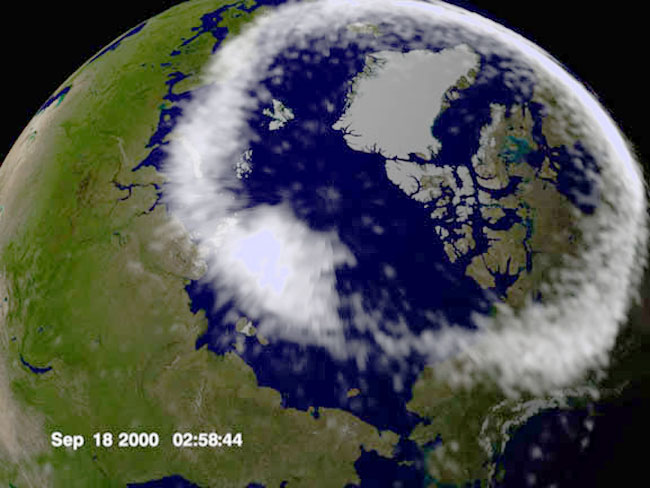
The study of atmospheres extends far beyond our own, though the methods remain remarkably consistent. Whether observing the proton auroras of Earth, where solar particles strike the ionosphere, or searching for helium escape in the atmosphere of a distant exoplanet like LHS 1140 b, the goal is to detect the chemical signatures of a world. In the case of exoplanets, the challenge is often distinguishing between a genuine planetary signal and the variable behavior of the host star itself.
As our instruments become more sensitive, the line between signal and noise becomes increasingly fine. Whether we are measuring the isotopic ratio of carbon in the atmosphere of Beta Pictoris b or tracking the movement of smoke across North America, we are engaged in the same fundamental task: decoding the light that has passed through, or been emitted by, a complex, gaseous environment. The atmosphere, whether on a planet light-years away or right here at home, remains the primary archive of a world's physical and chemical history.