Atmospheric Signals Across Distant Worlds
From the haze of the Sichuan Basin to the ammonia-rich clouds of distant exoplanets, our understanding of the atmosphere is a constant struggle to separate signal from noise.
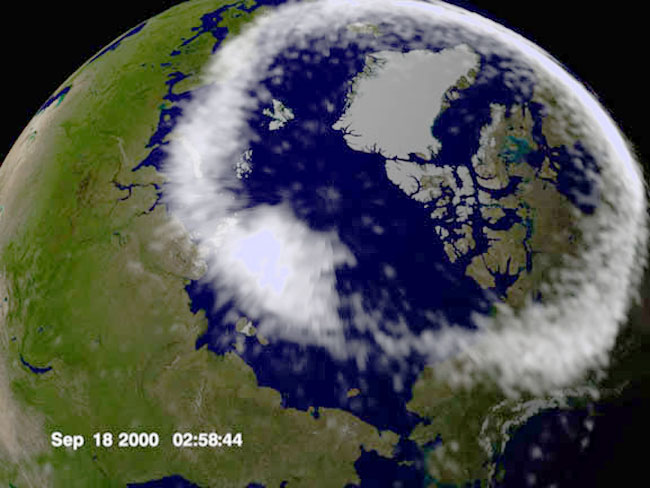
The Fluid Boundary
The atmosphere is rarely a static envelope; it is a restless, layered fluid that serves as both a shield and a mirror. From the troposphere, where we live and where weather patterns like the Canadian anticyclones of 2016 shift the global thermostat, to the ionosphere, where solar protons carve glowing auroral rings into the dark, our understanding of this medium depends entirely on our vantage point. Whether viewed from the International Space Station, where the terminator line blurs the transition from day to night, or from the ground, where wind farms act as massive, distributed sensor arrays for turbulent flow, the atmosphere remains a complex system of interactions between light, particles, and motion.
Watching from Above
Monitoring the air we breathe has moved from sporadic ground sampling to continuous, high-resolution surveillance from geostationary orbit. Instruments like the Geostationary Environmental Monitoring Spectrometer (GEMS) now provide hourly snapshots of pollutants such as nitrogen dioxide and formaldehyde across Asia. These satellite observations are not merely passive recordings; they require sophisticated retrieval algorithms to separate stratospheric signals from tropospheric ones and to correct for the interference of clouds. As researchers refine these models, they find that even minor adjustments to how we interpret cloud fractions can significantly alter our perception of pollution levels, highlighting the necessity of calibrating space-based data against reliable ground-based networks like Pandora and MAX-DOAS.
Precision in atmospheric measurement is not a static achievement but a continuous negotiation between satellite algorithms and ground-truth validation.
The Basin Trap
The Sichuan Basin in China offers a stark example of how geography and synoptic weather patterns conspire to trap pollutants. In this region, persistent winter haze is not merely a product of local emissions but a result of large-scale pressure systems that dictate the stability of the boundary layer. When specific high-pressure patterns dominate, they introduce humid air that forms dense cloud cover, which in turn reflects solar radiation. This cloud-radiation interaction effectively suppresses the vertical mixing of the atmosphere, locking aerosols near the surface and exacerbating the very pollution that creates the haze. It is a feedback loop where the atmosphere’s own structure acts as a lid on human activity.
Engineering the Albedo
Human intervention in the atmosphere, whether intentional or accidental, reveals the fragility of these systems. Ship tracks—bright, reflective streaks in cloud cover caused by engine exhaust aerosols—demonstrate how small-scale particulate emissions can alter the planetary albedo. This phenomenon has prompted proposals for geoengineering, such as spraying salt-aerosol into the marine boundary layer to artificially brighten clouds. However, large-scale simulations suggest that such interventions are not without trade-offs. Injecting sulfur into the stratosphere to counteract warming may reduce surface PM2.5 by altering wind speeds and soil moisture, yet it simultaneously shifts the composition of the air we breathe, favoring secondary organic aerosols that carry their own health implications.
Human-made clouds offer a potential lever against global warming, yet they risk rearranging the chemistry of the air in ways we are only beginning to model.
Signals in the Noise
Beyond our own planet, the study of atmospheres provides a vital lens for understanding the evolution of distant worlds. The James Webb Space Telescope has recently detected ammonia in the atmosphere of GJ 504 b, a cold, giant planet, confirming models that predicted such molecules at specific infrared wavelengths. Conversely, the search for atmospheric escape on terrestrial planets like LHS 1140 b reminds us that detection is often fraught with ambiguity. Reported signals of helium absorption have proven elusive, sometimes appearing as signatures of planetary loss and other times as mere variability in the host star’s own activity. These celestial investigations serve as a reminder that whether we are looking at a distant gas giant or our own troposphere, the signal is always filtered through the noise of a dynamic, often unpredictable environment.