Atmospheric Pressure and Climate Dynamics
Atmospheric science reveals a world where the smallest particles and the largest pressure systems dictate the rhythm of our climate.
The Friction of Prediction
The study of the atmosphere often begins with the recognition that our models are imperfect mirrors of a chaotic reality. When researchers attempt to downscale global climate data to regional levels, they encounter persistent biases. For instance, models like the Conformal Cubic Atmospheric Model struggle to reconcile cold biases in maximum temperatures with the need for accurate precipitation forecasting. These discrepancies are not merely academic; they reflect the difficulty of capturing the nuances of northern wet seasons or the influence of ephemeral water bodies on local heat exchange.
This complexity is magnified by synoptic-scale patterns. In regions like the Sichuan Basin, winter air pollution is tethered to specific pressure systems that dictate wind, humidity, and cloud cover. When high-pressure ridges or low-pressure troughs dominate, they create stable stratifications that trap aerosols near the surface. Such patterns demonstrate that regional air quality is frequently a hostage to large-scale atmospheric circulation, where even a slight shift in sea-surface temperatures—such as those driven by El Niño or La Niña—can delay seasonal cooling across an entire continent.
Weather is not a series of isolated events but a complex, interconnected system where local conditions are constantly negotiated by global forces.
Clouds as Thermal Regulators
Clouds are perhaps the most influential actors in the atmospheric theater, acting as both reflectors of solar energy and regulators of thermal gradients. In the Southern Hemisphere, storm tracks are sustained not just by the sun’s direct heat, but by the radiative effects of the clouds themselves. By reflecting sunlight, these cloud decks maintain the very temperature gradients that fuel the storms, creating a self-reinforcing cycle of activity that persists even when seasonal insolation wanes.
This capacity for reflection has inspired more radical interventions. Ship tracks—bright streaks of condensation formed around exhaust aerosols—demonstrate how human activity can inadvertently alter cloud properties. Scientists have considered whether this phenomenon could be harnessed intentionally, using salt-aerosol sprayers to seed clouds and increase their albedo. Such proposals highlight the profound, if daunting, realization that we have already begun to manipulate the radiative balance of the planet, whether by accident or by design.
The View from Above
While the lower atmosphere is shaped by clouds and pressure, the upper reaches of our air are subject to more exotic influences. Stratospheric ozone intrusions, for example, represent a direct link between the high-altitude atmosphere and the surface. These events, driven by Rossby waves and westerly jets, can transport ozone thousands of kilometers, significantly impacting air quality in regions like Eastern China. The pathways are varied: some intrusions descend directly, while others follow indirect routes that are more efficient at altering tropospheric chemistry over monthly timescales.
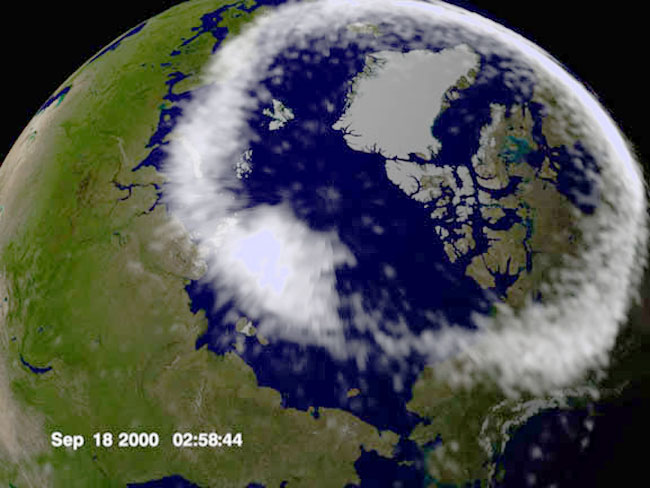
Even further out, the Earth’s magnetic field acts as a shield against the solar wind, yet it is not impenetrable. Occasionally, deep cracks in this magnetic armor allow solar protons to penetrate the ionosphere, creating auroras that are far more energetic than their electron-driven counterparts. These displays are visible reminders that our atmosphere is an open system, constantly bombarded by particles from space that leave their mark on our planet’s chemical and electromagnetic environment.
The Mechanics of Observation
To understand these phenomena, we rely on a hierarchy of measurement and simulation. From satellite-based spectrometers like GEMS, which provide hourly observations of air pollutants, to laser-guided adaptive optics that sharpen our view of the stars by measuring atmospheric turbulence, our ability to resolve the atmosphere is constantly improving. However, these tools require rigorous validation; comparing different instruments, such as Pandora and MAX-DOAS, often reveals significant discrepancies that must be reconciled through careful adjustment of retrieval settings.
Even our mathematical representations are evolving. New frameworks like AeroMELD move beyond traditional, rigid aerosol schemes by using latent variables to preserve the physical structure of particle populations. Simultaneously, researchers are applying sparse model predictive control to numerical weather prediction, attempting to steer precipitation outcomes through precise, small-scale atmospheric perturbations. Whether we are measuring the roughness of the ocean surface or the composition of an aerosol cloud, the goal remains the same: to move from observing the atmosphere to understanding the fundamental mechanics that drive its evolution.
Precision in measurement is the prerequisite for understanding, yet every tool we use to observe the atmosphere introduces its own set of distortions.