Atmospheric Patterns in Algorithmic Analysis
From the aerosol-laden troposphere to the distant spectra of exoplanets, our understanding of the air we breathe is a constant negotiation between observation and algorithmic correction.
A Fluid Tapestry
The atmosphere is rarely a static envelope. It is a fluid, restless system that registers the movement of the planet and the combustion of its inhabitants in equal measure. From the vantage point of the International Space Station, the terminator line—that diffuse boundary between day and night—reveals a troposphere thick with dust, scattering light in a gentle transition to darkness. Closer to the surface, the air is a chaotic tapestry of aerosols: black carbon from wildfires, sea salt whipped up by typhoons, and mineral dust swept from arid basins. These particles are not merely incidental; they are the active agents that define our weather, from the formation of rare, detached roll clouds along cold fronts to the persistent, haze-filled stagnations that settle over industrial regions.
The atmosphere is a fluid, restless system that registers the movement of the planet and the combustion of its inhabitants in equal measure.
The Precision of the View
Measuring this complexity requires a shift from terrestrial observation to the geostationary perspective. The Geostationary Environmental Monitoring Spectrometer (GEMS), positioned high above Asia, provides hourly snapshots of nitrogen dioxide and formaldehyde, offering a resolution that captures the diurnal pulse of urban pollution. Yet, the data is only as reliable as the algorithms that interpret it. Recent refinements in retrieval processors have shown that aligning viewing geometries and correcting for cloud interference are essential to reconciling satellite estimates with ground-based instruments like Pandora and MAX-DOAS. Even at the scale of wind farms, the atmosphere behaves as a complex sensor array; by applying fluid dynamics to the power fluctuations of turbine rows, we can map the invisible turbulence of the boundary layer with newfound precision.
Trapped in the Basin
In the Sichuan Basin, the relationship between topography, weather, and pollution reveals a dangerous feedback loop. Winter in this region is defined by persistent aerosol accumulation, driven by synoptic patterns that trap moist, cloudy air against the basin walls. When large-scale pressure systems—such as the east high–west low configuration—align, they create a cloud-radiation interaction that effectively starves the surface of solar energy. This inhibition of sunlight cools the ground while heating the upper atmosphere, stabilizing the boundary layer and preventing the vertical mixing that would otherwise disperse pollutants. It is a stark reminder that air quality is often dictated by the structural constraints of the landscape itself.
Air quality is often dictated by the structural constraints of the landscape itself.
The Calculus of Intervention
Human intervention in the atmosphere, whether intentional or accidental, carries unforeseen consequences for the climate and public health. Experiments in sulfate geoengineering, designed to offset global warming by injecting sulfur dioxide into the stratosphere, demonstrate that such measures could paradoxically alter the composition of surface-level particulate matter. While geoengineering might reduce total PM2.5 by suppressing dust and sea salt through increased soil moisture and lower wind speeds, it simultaneously fosters a cooler environment that encourages the formation of secondary organic aerosols. Similarly, counterfactual climate modeling suggests that our current understanding of anthropogenic forcing remains incomplete, as seasonal forecasts often struggle to capture the full complexity of ocean-atmosphere feedbacks.
Beyond the Home Horizon
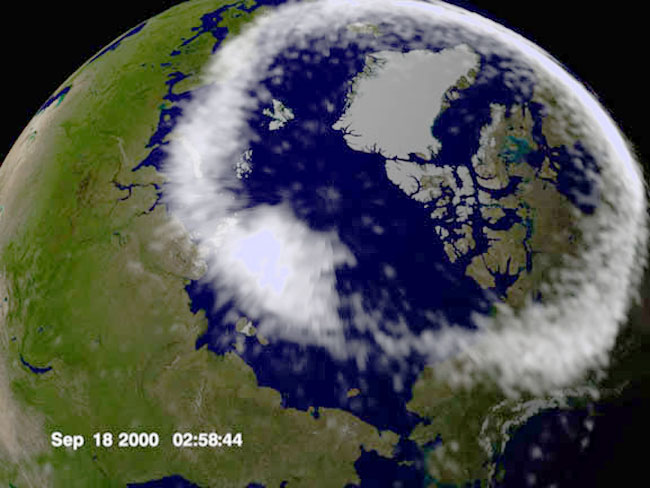
Beyond our own planet, the study of atmospheres serves as a mirror for our own limitations. When we look toward exoplanets like Beta Pictoris b, we rely on multimodal spectroscopy to disentangle the chemical signatures of distant worlds, a process fraught with the same challenges of telluric interference that plague our own observations. Even within our solar system, the detection of atmospheric phenomena—such as the elusive helium escape from temperate planets or the energetic proton auroras caused by cracks in the Earth's magnetic field—requires a cautious interpretation of data. In every case, the atmosphere remains a medium that obscures as much as it reveals, demanding that we constantly refine our tools to see through the noise.