Granular Reality and the Limits of Divisibility
As observational precision exposes the cracks in our standard models, physicists are moving away from the assumption of infinite divisibility toward a more granular, bounded reality.
The Friction of Observation
Modern physics is currently engaged in a quiet, persistent struggle against the tyranny of the infinite. For decades, the standard model of cosmology and particle physics has relied on mathematical frameworks that assume space, time, and energy are infinitely divisible. Yet, as our observational tools sharpen, this assumption is increasingly at odds with the data. We find ourselves in a period where the discordance between early-universe models and late-universe observations suggests that our foundational descriptions of reality may be incomplete.
Beyond the Idealized State
The tension is perhaps most visible in the study of the very early universe. Recent data from the Atacama Cosmology Telescope has forced a re-evaluation of long-standing inflationary models, such as those proposed by Starobinsky and Higgs. By applying Bayesian inference to these models, researchers have found that while these theories are not yet ready for the scrap heap, they are under significant pressure. The data suggests that the reheating stage—the period when the universe transitioned from an inflationary state to a hot, particle-filled one—is far more complex than previously assumed. We are no longer satisfied with simple, idealized equations; we require models that account for the messy, non-instantaneous reality of energy transfer.
We are no longer satisfied with simple, idealized equations; we require models that account for the messy, non-instantaneous reality of energy transfer.
The Geometry of the Finite
This drive toward precision extends to the microscopic scale, where the behavior of matter under extreme conditions challenges our computational methods. The quasiharmonic approximation, once the workhorse for predicting thermodynamic properties, often fails at high temperatures or in dynamically stabilized structures. By incorporating anharmonic effects through quasiparticle theory, physicists are now able to recover the experimentally observed behavior of materials that were previously considered anomalies. This shift from idealized harmonic models to those that embrace the anharmonic reality of atomic vibration mirrors a broader trend: the move away from perfect, frictionless systems toward a more granular understanding of physical processes.
Stochastic Realities
Perhaps the most radical proposal in this vein is the rejection of infinite divisibility itself. Some theorists argue that reality is built upon a minimal unit, a fundamental epsilon that prevents the emergence of singularities and zero-size particles. In this view, what we perceive as an infinite, unbounded universe is actually a topological illusion—a finite, closed manifold that allows for endless traversal without requiring infinite volume. By replacing the concept of infinity with a bounded, balance-driven structure, these frameworks aim to resolve the ultraviolet divergences that have plagued quantum field theory for generations.
Infinity does not exist as a physical magnitude; it exists only as motion on a closed finite space.
The Echo of the Unseen
As we refine our models, we are also developing new mathematical languages to describe the interaction between the quantum and classical worlds. The development of Bayesian formulations for hybrid quantum-classical dynamics allows us to treat wave functions and classical variables as components of a single stochastic process. This approach not only provides a more unified description of noise—whether quantum or classical—but also offers a powerful tool for state estimation. By treating quantum filtering as a hidden-state inference problem, we gain the ability to reconstruct trajectories that were previously obscured by the limitations of the density matrix. This is not merely a technical refinement; it is a fundamental shift in how we conceive of the boundary between the observer and the observed.
Conclusion
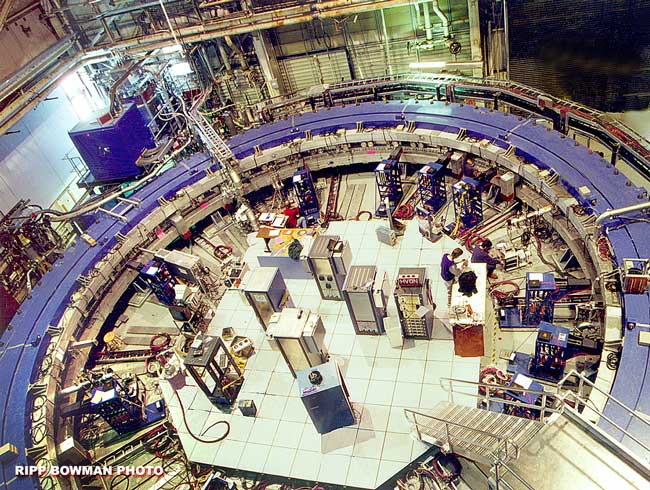
Ultimately, these efforts are united by a single goal: to reconcile our elegant mathematical structures with the stubborn, finite nature of the universe. Whether by analyzing the universal relations of neutron stars, exploring the optical signatures of regular black-bounce spacetimes, or investigating the subtle wobble of the muon as a potential window into supersymmetry, the objective remains the same. We are looking for the places where the standard model breaks, not because we wish to destroy it, but because we recognize that the true architecture of the cosmos is likely far more constrained, and far more interesting, than our initial assumptions allowed.