Stellar Evolution and Final Remnants
From the magnetic memories of white dwarfs to the fleeting phases of proto-neutron stars, the life cycle of a star is a study in enduring complexity.
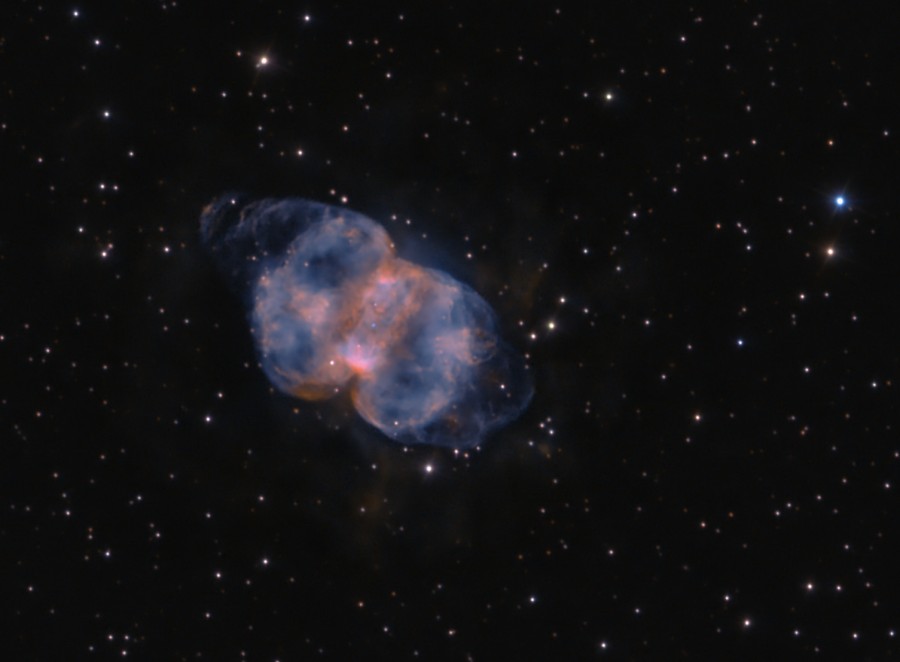
The Persistence of Magnetic Memory
Stellar evolution is often framed as a sequence of predictable stages, yet the magnetic fields that define a star’s behavior can persist in unexpected ways long after its core has ceased fusion. In white dwarfs, the remnants of sun-like stars, magnetism was long attributed to a dynamo driven by the crystallization of the core as the object cooled. Recent observations, however, suggest this mechanism is insufficient to explain the prevalence of magnetic fields in many isolated white dwarfs. Instead, evidence points to a legacy effect: magnetic fields generated by the convective cores of main-sequence progenitors can remain buried within the star, only to emerge at the surface once the star has transitioned into its white dwarf phase. This emergence occurs earlier in more massive stars, providing a consistent explanation for why magnetic white dwarfs tend to be more massive than their non-magnetic counterparts.
The magnetic signature of a star is not merely a product of its current state, but a lingering echo of its formative years.
Turbulence and the Dynamo
The mechanics of these magnetic fields are rooted in the complex interplay of rotation and convection. In younger, rapidly rotating stars, magnetic activity is driven by a dynamo that creates organized, global-scale structures within the convection zone. Simulations of such systems reveal that these magnetic wreaths can persist despite the turbulent nature of the surrounding plasma. While traditional theories often relied on the presence of a tachocline—a layer of shear at the base of the convection zone—to organize these fields, modern models show that differential rotation and turbulent correlations between convective flows and magnetic fields are sufficient to maintain these structures. This suggests that the internal magnetic architecture of a star is far more robust than previously assumed.
The Uncertain Mechanics of Accretion
As stars move from the pre-main-sequence phase toward maturity, their interaction with surrounding material changes significantly. In classical T Tauri stars, large-scale magnetic fields carve out a magnetospheric gap in the accretion disk, regulating the flow of gas onto the stellar surface. Monitoring of stars like TW Hya reveals that this process is inherently unstable, with accretion rates fluctuating on seasonal timescales. This instability challenges the universality of magnetospheric accretion models, particularly when applied to higher-mass stars. Observations of Herbig Ae/Be stars, which represent a transitional phase in stellar development, show that accretion signatures remain largely indifferent to the presence of a magnetic field. This implies that as stars develop radiative envelopes, their magnetic topologies become increasingly complex, rendering the simple dipole accretion model inadequate.
The Final Breath of the Giants
When a star exhausts its hydrogen fuel, it enters the Asymptotic Giant Branch (AGB) phase, becoming a prolific producer of dust that is eventually returned to the interstellar medium. High-resolution observations of dwarf galaxies like NGC 6822 reveal that this process is more nuanced than once thought. While carbon-rich stars are common, the unexpected prevalence of oxygen-rich AGB stars suggests that intermediate-mass stars undergo hot-bottom burning, a process that alters the chemical composition of the ejected material. This dust production is a critical component of galactic evolution, enriching the environment for future generations of stars. Eventually, the star sheds its outer layers entirely, creating a planetary nebula—a fleeting, luminous shroud that marks the star's final transition into a white dwarf.
Collapse and Remnants
For the most massive stars, the end is far more violent. A core-collapse supernova leaves behind a dense remnant, such as a neutron star, where the extreme conditions allow for exotic states of matter. Within the first few seconds of a proto-neutron star's life, hadronic matter may transition into a color-superconducting state. This phase is transient, governed by the star's cooling trajectory and the conservation of baryon number. Whether this state persists or vanishes depends on the star's mass and the specific equation of state of the dense matter. Meanwhile, the debris from the initial explosion expands into the surrounding space, forming remnants like the Veil Nebula, which continue to interact with and shape the interstellar medium long after the original star has vanished from the sky.