Not a Comet
From the discarded lists of early astronomers to the violent remnants of supernova explosions, these interstellar clouds define the life cycle of the cosmos.
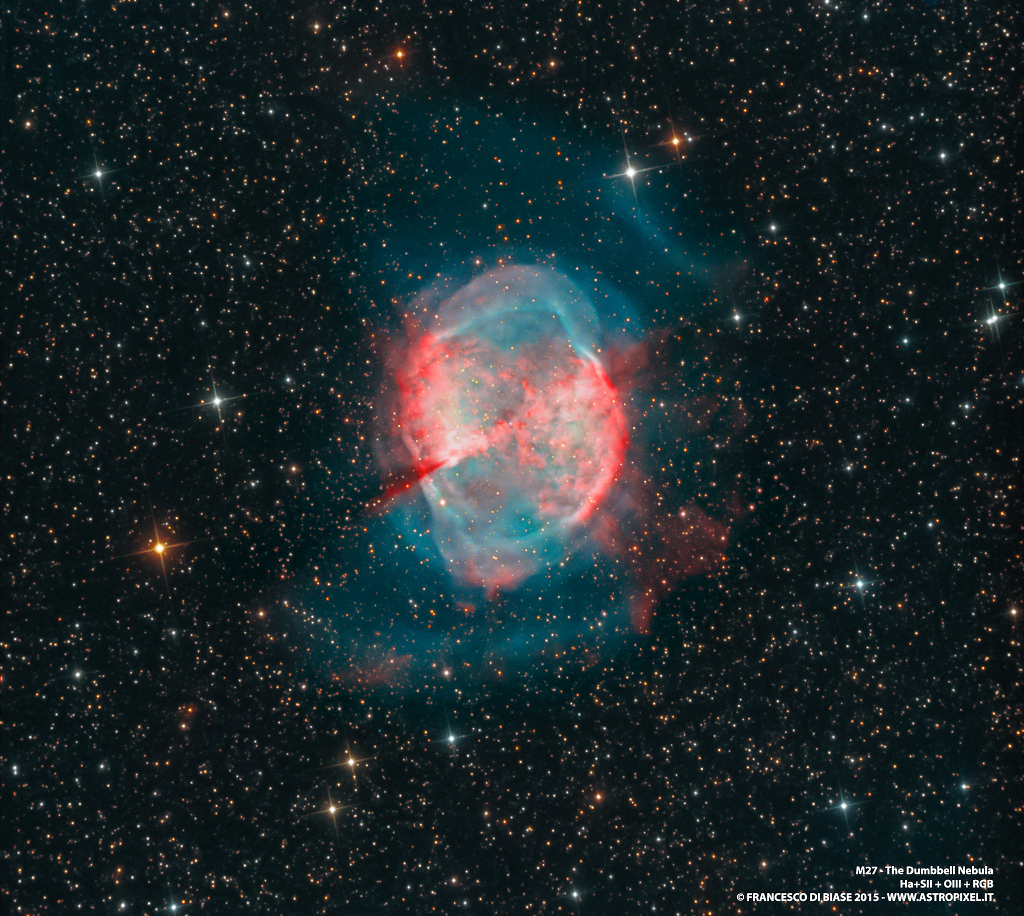
Cataloging the Celestial Noise
In the eighteenth century, Charles Messier sought comets with the persistence of a tax collector. His primary challenge was not the scarcity of comets, but the abundance of stationary, fuzzy patches in the night sky that threatened to mislead his observations. He began a list of these distractions, a ledger of objects that were definitively not comets. One entry, M27, appeared round and planet-like through his modest glass, earning it the label of a planetary nebula—a misnomer that persists in our nomenclature today. We now understand that M27 is not a planet, but the final, exhaled breath of a sun-like star, a gaseous shroud glowing under the influence of the dying core's ultraviolet light.
The history of astronomy is littered with the debris of things mistaken for something else.
The Sculptors of the Void
Nebulae are rarely static portraits; they are the active sites of cosmic construction and destruction. In the constellation Ara, the emission nebula NGC 6188 serves as a theater for the birth of massive, young stars. These stars, formed only a few million years ago, act as the architects of their own environment. Their intense stellar winds and ultraviolet radiation carve the surrounding molecular clouds into fantastic, jagged shapes, effectively sculpting the very gas from which they emerged. This process is often a relay race, where the shockwaves from previous generations of stars compress gas to ignite the next cycle of creation.
Dust and the Reflected Light
Not all nebulae announce themselves with the fiery glow of ionized hydrogen. In the Southern Crown, the Corona Australis region reveals a different mechanism of visibility. Here, cosmic dust clouds act as opaque curtains, obscuring the view of the Milky Way’s background stars and hiding the stellar embryos forming within. When these clouds are near hot, luminous stars, they do not emit their own light; instead, they act as mirrors. The characteristic blue hue of reflection nebulae like NGC 6726 is the result of starlight scattering off the fine particles of interstellar dust, turning a dark, cold region into a luminous, ghostly vista.
Light does not merely reveal the universe; it bounces off the dust to define the shape of the dark.
Echoes of a Cataclysm
The Veil Nebula, or the Cygnus Loop, represents the violent aftermath of a stellar death. Unlike the gentle shedding of outer layers seen in planetary nebulae, this structure is the remnant of a supernova explosion that reached Earth’s vicinity over five millennia ago. The resulting shock wave continues to plow through the interstellar medium, sweeping up material and exciting atoms into a brilliant display of color. The filaments we observe—the Witch's Broom and Pickering's Triangle—are essentially ripples in a cosmic sheet, seen edge-on as the debris of a massive star continues to expand into the void.