Healing Methods Through Human History
From the woodcut to the antibiotic, the history of healing is a record of our shifting attempts to see, name, and master the invisible.
The Cartography of the Interior
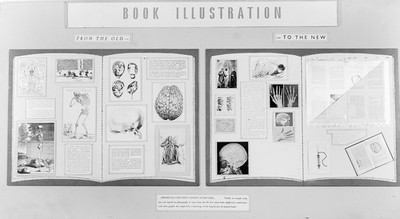
The history of medical illustration is, in essence, a history of the human desire to render the interior of the body legible. For centuries, the physician relied upon the woodcut and the lithograph to bridge the gap between the unseen anatomy and the diagnostic eye. Early printed books, such as those featuring the Nuremberg skeleton or the intricate plates of Vesalius, functioned as static maps for a territory that was otherwise inaccessible to the living. By the mid-twentieth century, this tradition had evolved into a sophisticated dialogue between art and technology, where the flexichrome process and the radiograph allowed for a nuanced, layered understanding of pathology that the early illustrators could only have imagined.
The history of medical illustration is a history of the human desire to render the interior of the body legible.
The Tyranny of the Clock
While illustrators sought to capture the body’s form, others sought to intervene in its most precarious moments. The concept of the golden hour, popularized by military surgeons in the mid-twentieth century, introduced a temporal urgency to the practice of medicine. It posited that the window between trauma and death was a finite, critical span requiring immediate, decisive action. Though modern research has tempered the rigidity of this sixty-minute rule, the principle remains a cornerstone of emergency care, emphasizing that in the face of severe injury, time is not merely a measurement but a therapeutic variable.
The Chemical Turn
The discovery of penicillin transformed the physician from a witness to a combatant. When Alexander Fleming identified the antibacterial properties of Penicillium mould, he provided a tool that fundamentally altered the prognosis of infectious disease. This shift from observation to active chemical intervention was not merely a scientific milestone but a social one, as the mass production of antibiotics eventually made the once-lethal staphylococcus and streptococcus manageable threats. The subsequent development of semi-synthetic derivatives further refined this power, allowing medicine to tailor its response to an ever-evolving bacterial landscape.
The discovery of penicillin transformed the physician from a witness to a combatant.
The Politics of the Practitioner
Medical progress has also been defined by those who challenged the boundaries of the profession itself. Madeleine Pelletier, a French psychiatrist and activist, navigated a world that sought to exclude her on the basis of both gender and political conviction. By overcoming significant educational barriers to become the first woman in France to hold a doctorate in psychiatry, she proved that the history of medicine is inseparable from the history of those who fought for the right to practice it. Her life, marked by both intellectual rigor and political defiance, serves as a reminder that the medical establishment has often been as much a site of social struggle as it has been a sanctuary for scientific advancement.
The Precision of the Cure
The trajectory of modern medicine is perhaps best exemplified by the work of researchers like Dorothy Hansine Andersen and Mary Ellen Avery. Andersen’s identification of cystic fibrosis and her development of diagnostic tests for the disease fundamentally changed the lives of countless children, while Avery’s discovery of the role of surfactant in respiratory distress syndrome provided a lifeline for premature infants. These contributions highlight a shift toward molecular and physiological precision, where the focus moved from the general description of symptoms to the identification of specific biological mechanisms. In the hands of such figures, medicine became a discipline of profound, life-saving specificity.