Mathematical Precision in Detecting Spacetime Ripples
As our detectors grow more sensitive, the challenge of interpreting the faint ripples of spacetime lies in the accuracy of the mathematics we use to hear them.
The Subtle Jiggle of Spacetime
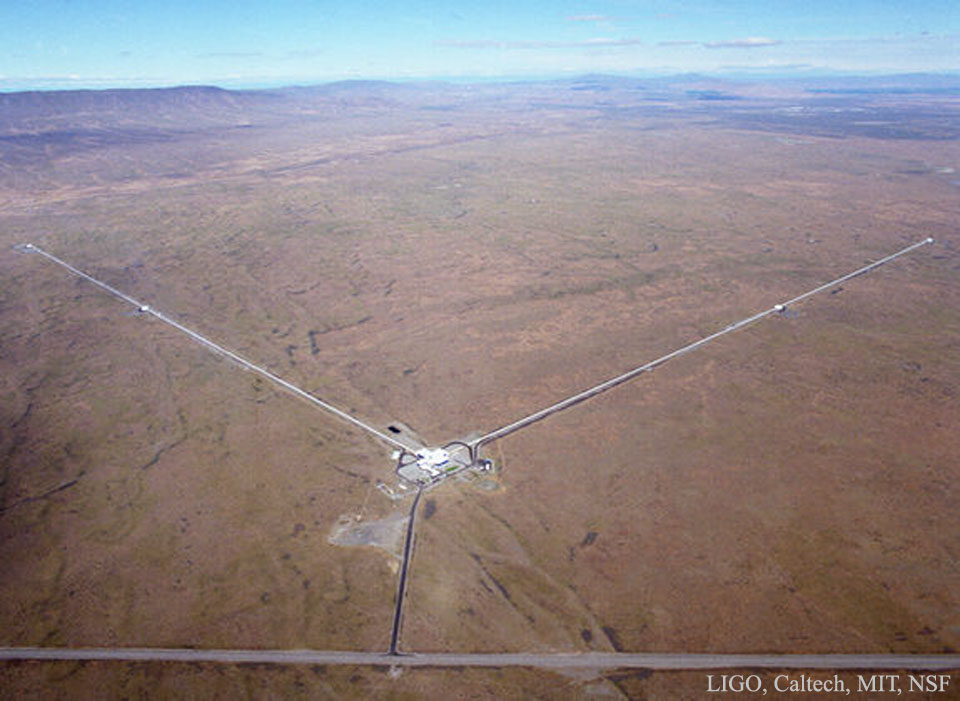
The fundamental premise of gravitational wave astronomy is as elegant as it is demanding. While electromagnetic radiation—light—is the product of moving charges, gravitational radiation arises from the motion of mass itself. When these waves pass through an object, they induce a minute, symmetric distortion, compressing and stretching the space it occupies like a rubber ball being squeezed and released. Detecting this requires instrumentation of extreme precision, capable of measuring displacements smaller than the width of an atomic nucleus across several kilometers of vacuum.
Accelerate any mass and you will generate ripples in the fabric of the universe.
Modes Beyond the Standard
General relativity predicts two primary polarization modes for gravitational waves, both transverse and massless. However, theoretical extensions to gravity often suggest a more crowded landscape. In certain nonmetric theories, such as f(Q,B) gravity, the inclusion of a boundary term introduces a third, massive scalar mode. This mode, which possesses zero helicity, emerges alongside the standard plus and cross polarizations. Such theoretical frameworks serve as a reminder that our current understanding of gravity remains a work in progress, subject to the possibility that the universe communicates through channels we have yet to confirm.
The Peril of the Imperfect Template
The search for these waves relies on waveform templates—mathematical models that describe how a binary black hole merger should sound. If these templates are inaccurate, the resulting analysis suffers. Research indicates that as detectors become more sensitive, systematic biases in parameter estimation become increasingly problematic. When models fail to account for complex behaviors like spin precession or asymmetric mass ratios, the data can lead researchers to incorrectly infer non-standard gravitational physics. At high signal-to-noise ratios, these mismodellings do not merely introduce error; they actively skew the interpretation of the cosmos.
A mismatch between the model and the reality of the signal can lead to a false identification of physics that simply is not there.
Refining the Mathematical Mirror
To mitigate these biases, the field relies on the effective-one-body (EOB) framework, which translates the complex dynamics of two-body systems into a more manageable analytical form. Recent advancements have focused on improving how logarithmic terms are handled within these models. By replacing standard approximations with more consistent resummation schemes, researchers have significantly reduced the unfaithfulness between theoretical predictions and numerical relativity simulations. This precision is essential for the next generation of detectors, which will require templates capable of capturing the nuances of eccentric and highly spinning binaries.
The Computational Horizon
With hundreds of events already cataloged and the Einstein Telescope on the horizon, the computational cost of analyzing gravitational wave data is reaching a breaking point. Machine learning offers a potential escape, using surrogate waveforms to accelerate the likelihood calculations necessary for parameter estimation. While these models currently introduce their own systematic biases, the ability to calibrate and reweight these outputs suggests a future where rapid, high-fidelity analysis is possible. The challenge lies in ensuring that these shortcuts do not sacrifice the rigor required to test the limits of general relativity.
As the volume of detected events grows, the bottleneck shifts from the sensitivity of our sensors to the speed of our calculations.