Echoes of the Invisible
As our sensitivity to the ripples of spacetime grows, the challenge shifts from merely hearing the universe to deciphering the noise within the signal.
The Dictionary Problem
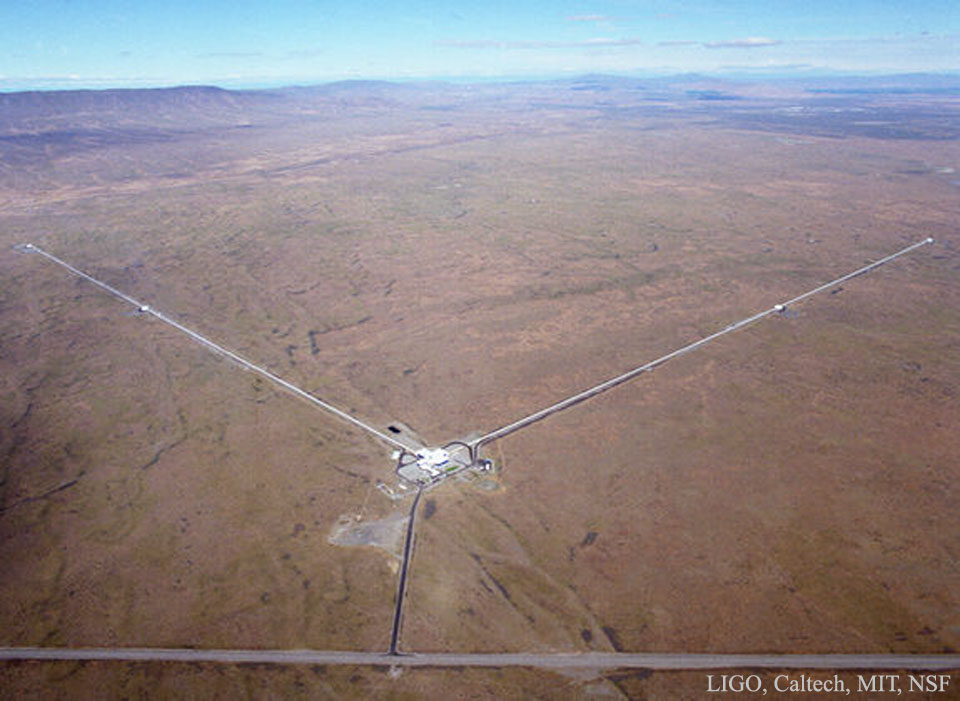
Accelerating a mass produces gravitational radiation, a concept that remained theoretical for decades until the construction of vast interferometers like LIGO. These instruments detect the infinitesimal distortion of spacetime—a rhythmic, symmetric jiggle—caused by cataclysmic events such as the collision of black holes. As these detectors undergo constant upgrades to increase their sensitivity, they capture signals of greater complexity and distance. However, the ability to extract physical meaning from these detections relies entirely on waveform models, which act as the dictionary for translating raw data into astrophysical properties.
The precision of our instruments has outpaced the fidelity of the mathematical templates we use to interpret what they see.
Shadows in the Data
The current challenge lies in the systematic biases inherent in these models. When a binary system involves high spin, significant precession, or extreme mass ratios, the standard templates often fail to recover the true parameters of the source. For instance, binaries with primary spins exceeding a certain magnitude are significantly more prone to estimation errors, which can skew our understanding of mass distributions and supernova physics. Even as researchers develop faster, machine-learning-assisted surrogates or improved post-Newtonian models, the underlying degeneracy—where different physical configurations produce nearly identical signals—remains a persistent hurdle for both current ground-based detectors and future space-based missions like LISA.
The Geometry of Resonance
In systems where a stellar-mass object orbits a massive black hole, the inspiral can last for hundreds of thousands of cycles. These extreme mass-ratio inspirals offer a pristine laboratory for testing strong-field gravity, provided we can model the transient orbital resonances that occur during the process. Traditional analytical methods often struggle with these crossings, as near-identity transformations tend to diverge. By shifting the mathematical framework to the Koopman operator, researchers can now treat these resonances as linear evolutions, allowing for a far more stable and precise reconstruction of the signal's history.
We are learning that the most profound insights are often hidden in the subtle, transient resonances of the inspiral.
The Missing Counterpart
Gravitational waves do not exist in a vacuum of information; they are increasingly paired with electromagnetic observations to form a multi-messenger picture of the cosmos. When a neutron star merger occurs, the resulting kilonova—a brilliant, radioactive explosion—provides a second window into the event. Yet, even here, the process of matching gravitational data to light is fraught with uncertainty. Bayesian tools and probabilistic frameworks are now essential for predicting kilonova spectra from gravitational wave posteriors, yet the lack of observed counterparts in recent runs highlights the difficulty of pinning down these faint, fleeting events.
Lensing and the Cosmological Scale
The ambition to use gravitational waves for precision cosmology requires us to account for the lensing effects of intervening matter. In the geometric optics regime, mass-sheet degeneracy can obscure the true nature of a lens, leading to biased cosmological parameters. While gravitational waves are subject to wave-optics effects due to their long wavelengths, the same degeneracies can emerge. Breaking these requires the superior sensitivity of third-generation detectors, which will eventually allow us to disentangle the lens from the source and turn the universe's own structure into a tool for measurement.