Cosmic Signals and Model Noise
As our detectors grow more sensitive, the challenge lies not in hearing the universe, but in deciphering the static of our own models.
A New Scale of Listening
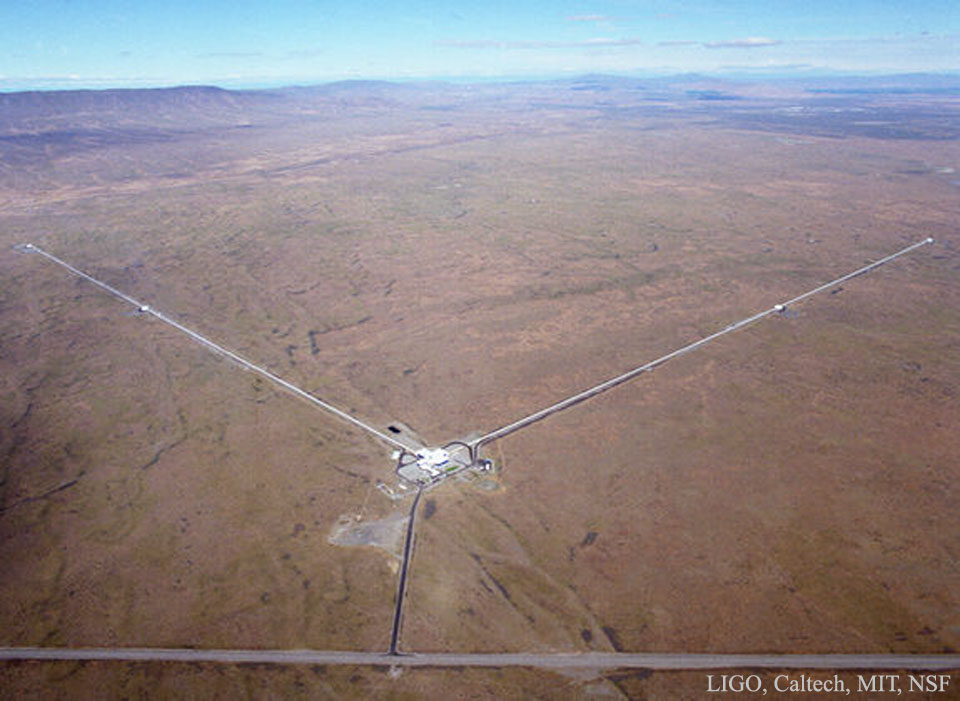
The detection of gravitational waves has shifted from a feat of experimental physics to a routine tool for mapping the cosmos. By measuring the minute, symmetric distortions in spacetime caused by accelerating masses, observatories like LIGO have begun to catalog the violent mergers of black holes and neutron stars. Yet, the current generation of detectors is merely a prelude. Plans for third-generation facilities, such as the Cosmic Explorer and the Einstein Telescope, promise a sensitivity increase of up to two orders of magnitude. This leap will allow us to peer beyond the peak of star formation, capturing the echoes of primordial black hole mergers that occurred shortly after the Big Bang. By linking these detectors into a global network, researchers aim to move beyond simple detection, using precise localization to facilitate multimessenger astronomy, where the gravitational signal is paired with light from the same event.
We are moving from an era of discovery to one of forensic precision, where the smallest error in our template can obscure the physics of the abyss.
The Burden of the Model
The utility of these detectors is tethered to the accuracy of the mathematical templates used to interpret the data. When a signal arrives, it is compared against a library of predicted waveforms; if the model is flawed, the inferred properties of the source—its mass, spin, and distance—will be systematically biased. Current research indicates that as we target more complex systems, such as those with high spin or significant asymmetry, our existing models begin to falter. In some cases, the bias is significant enough to compromise our understanding of fundamental cosmological parameters, such as the Hubble-Lemaître constant. Even in space-based scenarios like those proposed for LISA, certain physical phenomena, such as spin inversions in supermassive binaries, remain frustratingly degenerate, appearing nearly identical to simpler, non-inverting systems within current restricted models.
Navigating the Resonant Void
Complexity in the source itself introduces further hurdles. Eccentric orbits, where the binary components do not follow perfect circles, leave distinct signatures in the gravitational wave data. Identifying these signatures is essential for understanding how such systems form, yet the computational cost of analyzing them is immense. Standard Bayesian inference, which requires comparing millions of potential waveforms against the observed data, struggles with the multimodal nature of these eccentric signals. Researchers are now employing advanced techniques, such as the use of the Koopman operator to handle orbital resonances, to ensure that our models remain stable and accurate even when the dynamics become chaotic. These methods allow for the extraction of physical parameters from extreme mass-ratio inspirals, providing a clearer view of the strong-field gravity surrounding massive black holes.
The Limits of Inference
As we push toward higher precision, we encounter the phenomenon of mass-sheet degeneracy, a classic problem in gravitational lensing where different configurations of lens and source produce the same observable effect. While this degeneracy is well-understood in electromagnetic astronomy, gravitational waves operate in the wave-optics regime, where the long wavelength of the signal interacts with the lens in ways that could potentially break the deadlock. However, this requires the extreme sensitivity of future detectors. To manage the resulting computational load, some teams are turning to machine learning, utilizing surrogate waveforms generated by neural networks to speed up the inference process. While these models introduce their own systematic biases, they offer a path forward for handling the vast influx of data expected from the next generation of observatories.
Our ability to see the universe is only as sharp as the mathematics we use to filter the noise.
From Waves to Light
The ultimate goal of this precision is to bridge the gap between gravitational signals and the electromagnetic spectrum. By developing probabilistic frameworks that predict the light curves of kilonovae directly from gravitational wave data, scientists can better interpret the aftermath of neutron star mergers. These models account for the uncertainties inherent in our gravitational measurements, propagating them into our predictions for the resulting light. As we refine these tools, we move closer to a unified view of the universe, where the silent ripples of spacetime and the visible glow of stellar debris tell a single, coherent story of cosmic evolution.