Preserving Ancient Material Culture
From the digital reconstruction of crumbling ruins to the preservation of ancient textiles, our efforts to anchor the past are as much about the present as they are about history.
The Digital Mirror
The preservation of cultural heritage has moved beyond the physical act of stabilizing stone or repairing parchment. Today, it involves the construction of digital twins—complex, dynamic systems that integrate real-time data with expert knowledge to manage risk at heritage sites. By employing virtual and augmented reality, managers can now navigate these digital replicas to assess threats with a precision that traditional desktop interfaces cannot match. While virtual reality offers a superior sense of immersion, the cognitive load remains a critical factor in how effectively these tools translate data into actionable insight.
We are no longer merely curators of objects, but architects of the digital environments that house our collective memory.
Visualizing the Excavation
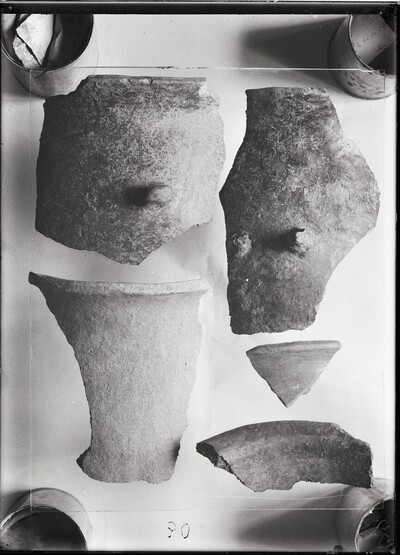
The photographic record of the Romanian Black Sea region, spanning from the late nineteenth century to the early twentieth, provides a window into the evolution of archaeological practice. These archives, comprising glass-plate negatives, albumen prints, and silver gelatin prints, document not only the monuments themselves—standing or in ruin—but the very act of discovery. These images capture the intersection of professional research and ethnographic observation, preserving the daily lives of ethnic groups alongside the meticulous documentation of religious and civil structures.
The Fluidity of Sacred Space
Few structures embody the volatility of cultural identity as clearly as the Hagia Sophia. Completed in 537 AD, its pendentive dome marked a shift in engineering that influenced centuries of religious construction. Throughout its history, it has functioned as a cathedral, a mosque, and a museum, reflecting the shifting political and spiritual tides of Constantinople and, later, Istanbul. Its redesignation as a mosque in 2020 serves as a reminder that heritage sites are rarely static; they are living, contested spaces that remain central to contemporary discourse.
A site that has served as both cathedral and mosque is never just a monument; it is a barometer of the society that claims it.
The Archive as Ambition
The ancient Library of Alexandria represents the zenith of the human desire to centralize knowledge. Established under the Ptolemies, it was a repository of unprecedented scale, fueled by a state-sponsored mandate to collect all available texts. While the library eventually succumbed to the pressures of underfunding, political purges, and fire, its legacy persists as the foundational myth of the universal archive. It highlights a recurring theme in human history: the drive to create a singular, authoritative record of our intellectual output.
Threads of Continuity
Cultural heritage is often found in the mundane, such as the sari, a garment whose history stretches back to the ancient Indian subcontinent. Unlike static monuments, the sari represents a living tradition of drape and weave that has evolved alongside social norms, from the ancient three-piece ensemble of the Vedic period to the modern Nivi style. Its endurance is a testament to the way cultural identity is performed and maintained through daily practice rather than preserved behind glass.
The Institutional Gaze
Museums and centers of art act as the final arbiters of what is deemed worthy of public memory. Whether through exhibitions of folk art or the curation of illuminated manuscripts, these institutions shape our understanding of cultural value. The act of guiding children through a collection of antique toys or displaying the intricate flourishes of medieval Armenian documents serves to bridge the gap between the past and the present, ensuring that these artifacts remain part of a shared, ongoing narrative.