Digital Records Preserving Ancient History
From the digital mapping of ancient settlements to the preservation of sacred art, our connection to the past is being rewritten by the very tools we use to observe it.
The Weight of Stone
The survival of a cultural site is seldom a passive affair. In the Ukrainian territories, the sacred art of the Roman Catholic Church has been the subject of decades of rigorous inventory, a process that balances theological purpose with historical preservation. This work is not merely academic; it is a defensive act against the erosion of time and the sudden, violent threats of military conflict. The challenge lies in the sheer volume of liturgical items and shrines—numbering in the tens of thousands—that require attribution and protection.
Elsewhere, the struggle against degradation is increasingly mediated by technology. At a 20th-century fortification in Romania, researchers have moved beyond traditional site visits, employing drone-based photogrammetry and 3D point cloud analysis to detect cracks and material loss. This semi-automatic approach offers a practical, low-cost method for monitoring structural integrity. Such efforts underscore a shift in how we approach heritage: the monument is no longer just a static object to be admired, but a dynamic system that must be continuously measured and re-evaluated to survive.
The physical endurance of a monument is rarely a matter of luck; it is a ledger of constant, often invisible, maintenance.
Patterns in the Landscape
Digital tools are also reshaping our understanding of how human settlements interact with their environments. In the Nanxi River Basin of China, the traditional Jiangnan landscape is being mapped through GIS spatial analysis to reveal how villages have adapted to water systems and topography over centuries. By classifying these settlement patches, researchers are creating a spatial organization model that documents the resilience of traditional life against the pressures of modern urbanization.
This drive to digitize extends to the intangible. A new platform for Chinese cultural heritage uses convolutional neural networks to organize and recommend vast archives of folklore and traditional medicine. By integrating natural language processing with generative models, these systems do more than store information; they actively facilitate the transmission of knowledge. The goal is to ensure that the patterns of the past remain accessible in an era defined by the rapid, often disorienting, flow of big data.
The Archive as Witness
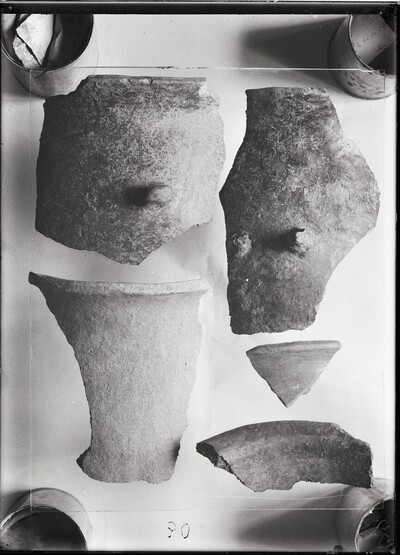
The photographic record of the late 19th and early 20th centuries serves as a primary witness to the archaeological practices of the past. A collection held by the Vasile Pârvan Institute of Archaeology reveals the dual nature of these early efforts: they were as much about documenting the lives of local ethnic groups as they were about excavating ruins. These glass-plate negatives and albumen prints capture not just the stone monuments of the Romanian Black Sea region, but the people who lived in their shadow.
These images, once used as teaching materials or simple records of excavation, now function as a vital link to a vanished context. They show us the inside of monuments that may have since crumbled or been altered, providing a visual history that complements the physical site. The archive, in this sense, is a repository of human imagination, preserving the perspective of the photographer alongside the object of their study.
Stories Written in the Stars
Cultural heritage is not always anchored to the earth. For the Tupi peoples of South America, the night sky serves as a canvas for enduring legends, where the constellations are not just astronomical markers but records of human experience. This practice of projecting stories onto the stars is a universal impulse, one that documents the breadth of human intelligence and the ways we make sense of the world through narrative.
This same impulse manifests in the objects we collect and carry with us. A quilt, acquired by foreign service officers in Pakistan or India and eventually gifted to a museum, carries the traces of a life lived across borders. Whether through the lens of a filmmaker like Jean-Marie Drot exploring the art of Venice and Florence, or the quiet preservation of a textile, we are constantly engaged in the act of curation. These objects and stories are the threads that bind our collective memory, ensuring that even as the world changes, the narratives we value remain within reach.
We project our legends onto the stars and our histories into the weave of a quilt, seeking a permanence that reality rarely provides.