Shadows in the Expansion
As our measurements of the cosmos grow more precise, the gaps in our understanding of dark energy and the observer's place within the whole only widen.
The Ledger of the Invisible
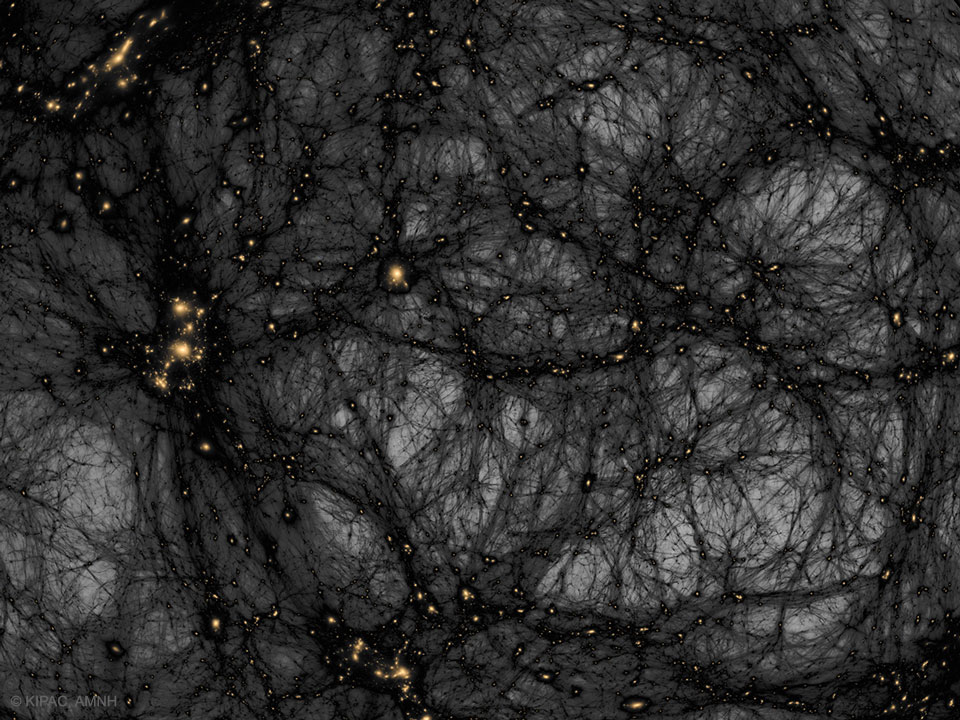
Cosmology often presents itself as a ledger of the absolute, a tally of the universe's age, its expansion rate, and the invisible constituents that dictate its geometry. Yet, the work of mapping the cosmos is less a matter of settling accounts than of managing persistent discrepancies. When we look at the cosmic microwave background, we see the oldest light, a tapestry of temperature fluctuations that suggests a universe dominated by dark energy and dark matter. These components, while essential to the standard model, remain stubbornly elusive in their fundamental nature. We are left with a universe that appears to be composed largely of things we cannot see, acting upon a stage whose expansion rate seems to shift depending on the lens through which we observe it.
We are left with a universe that appears to be composed largely of things we cannot see, acting upon a stage whose expansion rate seems to shift depending on the lens through which we observe it.
Testing the Limits of Gravity
Recent efforts to refine this picture have focused on whether the laws of gravity themselves require modification. By analyzing clustering measurements from the Dark Energy Spectroscopic Instrument, researchers have tested for deviations from general relativity. The results largely reinforce the standard framework, with parameters consistent with the predictions of Einsteinian gravity. Even when allowing for more complex, time-evolving models of dark energy, the data remains remarkably resistant to easy answers, suggesting that if the rules of the game are changing, they are doing so with a subtlety that evades our current precision.
Beyond the Static Constant
The tension between early-universe measurements and late-universe observations persists, prompting a move toward model-agnostic approaches. Traditional methods often rely on rigid parameterizations that may inadvertently bake assumptions into the results. By employing techniques like weighted function regression, researchers are now attempting to reconstruct the evolution of dark energy without the bias of arbitrary constraints. These reconstructions have provided hints of dynamical behavior, suggesting that dark energy might not be a static constant but a force that shifts its character over cosmic time, transitioning between different regimes as the universe ages.
These reconstructions have provided hints of dynamical behavior, suggesting that dark energy might not be a static constant but a force that shifts its character over cosmic time.
The Observer's Dilemma
At the heart of these inquiries lies a deeper, more philosophical problem: how do we, as observers embedded within the system, assign probability to our own existence? The measure problem asks how to weigh observer-moments within an infinite or complex history. It is not merely a question of data, but of how we define the reference class of an observer. Without a global sampler, we are forced to distinguish between dynamical transition probabilities and the subjective credence of a self-locating subject. This distinction is vital; it prevents us from conflating the physical history of the universe with the specific, localized experience of those who inhabit it.
The Discipline of Correction
The scientific record is not a static monolith, but a living process of correction. Retractions, such as those involving claims about microgravity or local causality in specific spacetimes, serve as the necessary friction that keeps the enterprise honest. Whether through the rigorous testing of fundamental constants—which, if they were to vary, would signal a collapse of the equivalence principle—or the quiet removal of flawed papers, the discipline advances by pruning its own errors. We are left with a portrait of a universe that is vast, largely hidden, and deeply sensitive to the methods we choose to measure it.