Mapping Cosmic Shadows and Dark Energy
As our measurements of the cosmos reach unprecedented precision, the standard model of the universe is being tested not by what we see, but by the persistent, unexplained shadows of dark energy and the role of the observer.
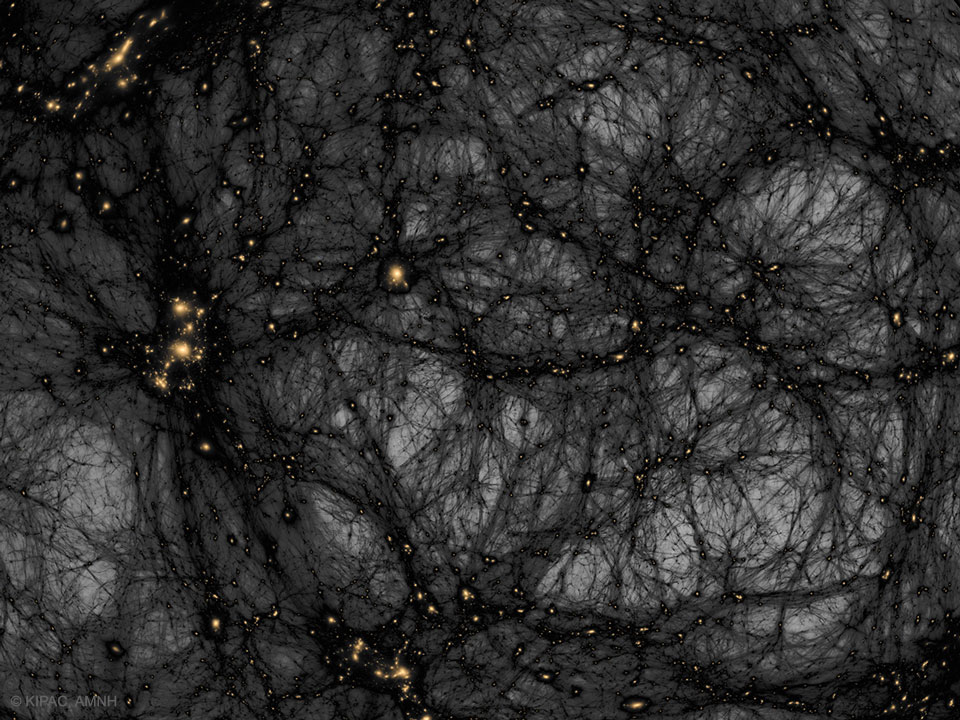
The Persistent Shadow of the Unseen
The modern map of the cosmos is less a portrait of light and more a cartography of what remains hidden. While galaxies and clusters of stars appear as the primary denizens of the night, they are merely the rare, bright clumps in a much larger, darker web. Simulations show these filaments of dark matter stretching across the void like a vast, invisible scaffolding, dictating the movement of everything we can actually see. Even the normal matter—the atoms that constitute our bodies and the ground beneath us—is largely missing from our direct view, found instead in tenuous, hot gas filaments that bridge the gaps between galaxies.
This discrepancy between the visible and the predicted has forced a reliance on the cosmic microwave background, the oldest light in existence. By mapping the temperature fluctuations of this ancient surface, researchers have confirmed that the universe is dominated by dark energy, a repulsive force that drives expansion, and dark matter, which provides the gravitational pull necessary for structure to form. Yet, the nature of these components remains elusive, leaving us to describe the universe through the effects of things we cannot touch.
The universe remains a ledger where the entries for matter and energy never quite balance without the addition of invisible, hypothetical variables.
Testing the Limits of General Relativity
For decades, the standard model of cosmology has rested on the foundation of general relativity. However, as measurement precision increases, the pressure to verify whether gravity behaves exactly as Einstein predicted has intensified. Recent observations from the Dark Energy Spectroscopic Instrument have provided a rigorous test of these limits, examining whether gravity deviates from standard expectations on the largest scales. When researchers model the clustering of galaxies and the way light bends through space, they look for subtle deviations in gravitational parameters.
So far, the data remains stubbornly consistent with general relativity. Even when accounting for complex theories like Horndeski gravity or models that allow for phantom-crossing dark energy, the results consistently point back to the unity values predicted by traditional physics. While some earlier studies suggested tensions in the data, these have largely dissolved with the use of more refined statistical likelihoods. The quest to find a crack in the theory has instead reinforced its resilience, even as we continue to probe the boundaries of gravitational stability.
The Evolution of Dark Energy
The assumption that dark energy is a constant, unchanging property of space has begun to look increasingly fragile. Recent analyses, utilizing model-agnostic methods like Weighted Function Regression, have allowed researchers to move beyond the arbitrary constraints of older, simpler models. By assigning Bayesian weights to various potential behaviors, this approach reveals a universe where dark energy appears to evolve over time, potentially transitioning between different physical states as the cosmos ages.
This evidence for a dynamical component, appearing at a significant level of statistical confidence, suggests that the expansion of the universe is not a simple, monotonic process. Instead, the data hints at a transition from phantom to quintessence behavior at relatively recent cosmic times. While these findings do not resolve the long-standing tension regarding the exact rate of cosmic expansion, they do suggest that our standard, static view of dark energy may be an artifact of overly restrictive mathematical assumptions.
We are moving past the era of simple labels, replacing static assumptions with a dynamic, fluid understanding of the cosmic expansion.
The Observer in the Machine
As our cosmological models grow more sophisticated, the role of the observer has moved from a passive witness to a central problem in the theory itself. When we speak of the probability of our own existence within a vast, perhaps infinite, multiverse, we encounter the measure problem. This is not merely a question of what we see, but of how we weigh the significance of our own observations. To make sense of the universe, one must distinguish between the objective frequency of events and the subjective, self-locating credence of an observer.
Defining a typical observer requires a rigorous framework that separates the history of the universe from the specific, record-bearing subsystems that we call ourselves. Without a clear bridge between these two, any claim about what is typical or probable becomes ill-posed. The challenge lies in creating a consistent history of information updates, where the observer is an individuated physical system whose internal records shape its perception of the whole. It is a reminder that cosmology is not just the study of the stars, but the study of the conditions that allow for the existence of the very minds that map them.