Cosmic Geometry and the Expansion Gap
Modern cosmology grapples with the tension between our elegant mathematical models and the messy, granular reality of the expanding universe.
From Island Universes to Background Echoes
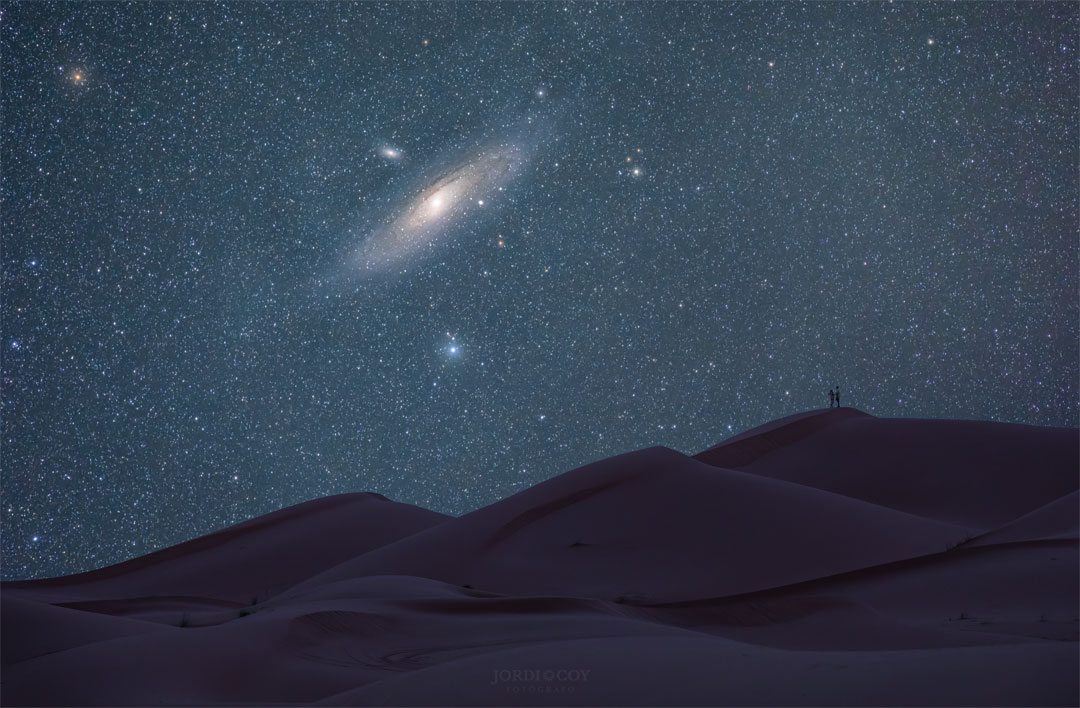
For most of human history, the heavens were perceived as a static backdrop. It was only a century ago that the debate over whether spiral nebulae were mere gas clouds or distant island universes was settled, fundamentally expanding our conception of scale. We now know that the Andromeda Galaxy, visible to the naked eye as a faint smudge, sits over two million light-years away, a neighbor on a collision course with our own. This realization shifted the focus of astronomy from cataloging local stars to measuring the vast, cold remnants of the Big Bang itself. The discovery of the cosmic microwave background in the 1960s provided the first tangible evidence of this origin, transforming the universe from a philosophical abstraction into a physical object of study.
The universe is not merely a collection of objects, but a shifting dialogue between the primordial and the present.
The First Architects
The early universe was a violent, rapid laboratory. Shortly after the Big Bang, the first generation of stars ignited, seeding the primordial gas with heavy elements. These stars, massive and short-lived, acted as the architects of the chemical complexity we see today. By observing the distribution of intergalactic helium, researchers have mapped the bubble-and-void geometry that characterizes the large-scale structure of space. This structure is not random; it is the imprint of gravitational forces acting upon the initial density fluctuations of the early cosmos, creating a web of matter that dictates where galaxies eventually coalesce.
The Precision Problem
Contemporary surveys like the Dark Energy Spectroscopic Instrument have brought a new level of rigor to this field. By modeling the clustering of galaxies and quasars, researchers have constrained the density of matter and the rate of cosmic expansion with unprecedented accuracy. Yet, this precision reveals new complications. The relationship between a galaxy's mass and its chemical composition, for instance, is highly sensitive to the stochastic nature of star formation. If star formation flickers too wildly, the orderly patterns we expect to see in galaxy evolution dissolve into chemical chaos, suggesting that our models of feedback and accretion must account for these rapid, small-scale fluctuations.
We are currently witnessing a period where the precision of our data outpaces the stability of our theories.
Tensions in the Fabric
Despite our progress, the standard model of cosmology faces significant internal discord. Discrepancies between different observational probes—such as the tension between two-dimensional and three-dimensional measurements of baryon acoustic oscillations—suggest that we may be missing a piece of the puzzle. Some point to potential systematics in our data, while others argue for new physics beyond the standard model. Even the void, a vast region of space seemingly devoid of matter, has become a subject of intense scrutiny, as its influence on the cosmic microwave background suggests that our understanding of gravitational effects at the largest scales remains incomplete.
Reconstructing the Law
To reconcile these observations, theorists are exploring modifications to general relativity. By introducing new scalar fields or adjusting the geometric properties of space-time, researchers are attempting to construct models that can accommodate the observed expansion history while remaining stable under perturbation. Whether through freezing gravity or f(Q,T) gravity, the goal is to find a framework that explains the behavior of dark energy and matter without invoking ghosts or instabilities. These mathematical reconstructions are more than just curve-fitting; they are attempts to define the fundamental laws that govern the evolution of the entire universe.