Climate Change Pressures on Global Systems
From the melting peaks of Xinjiang to the drying reservoirs of Mexico, climate change is no longer a distant abstraction but a present, systemic pressure on the world's physical and biological foundations.
The Scale of the Shift
Climate change is often discussed as a future crisis, yet the evidence of its current impact is etched into the landscape. In the high mountain ranges of Xinjiang, the last seventy years have seen a transformation in the frequency and nature of glacial hazards. While the raw number of these events has decelerated, the complexity of the risks has shifted. Glacial debris flows, for instance, have become more frequent in the Pamir and Tianshan regions since 2010, particularly during summer months on vital transit routes. These hazards are primarily driven by rising temperatures, which act as a persistent, underlying force regardless of annual rainfall fluctuations. This suggests that the environment is not merely reacting to weather, but is being fundamentally reshaped by a long-term thermal trend.
The environment is not merely reacting to weather, but is being fundamentally reshaped by a long-term thermal trend.
Compound Crises and Urban Limits
The volatility of this new climate is perhaps most visible when multiple stressors converge. In the spring of 2024, Mexico experienced a series of intense, long-lasting heatwaves that functioned as a mid-tropospheric heat dome. This event was not an isolated meteorological anomaly; it was exacerbated by pre-existing, severe droughts that had already strained water supplies and dried out critical reservoirs. The result was a cascading failure of essential systems, from urban water shortages in Mexico City to the collapse of local fisheries and tourism in places like Lake Patzcuaro. When heat and drought feedback into one another, the impact on human health and economic stability becomes acute, demonstrating how climate change acts as a force multiplier for existing vulnerabilities.
The Fragility of Biological Systems
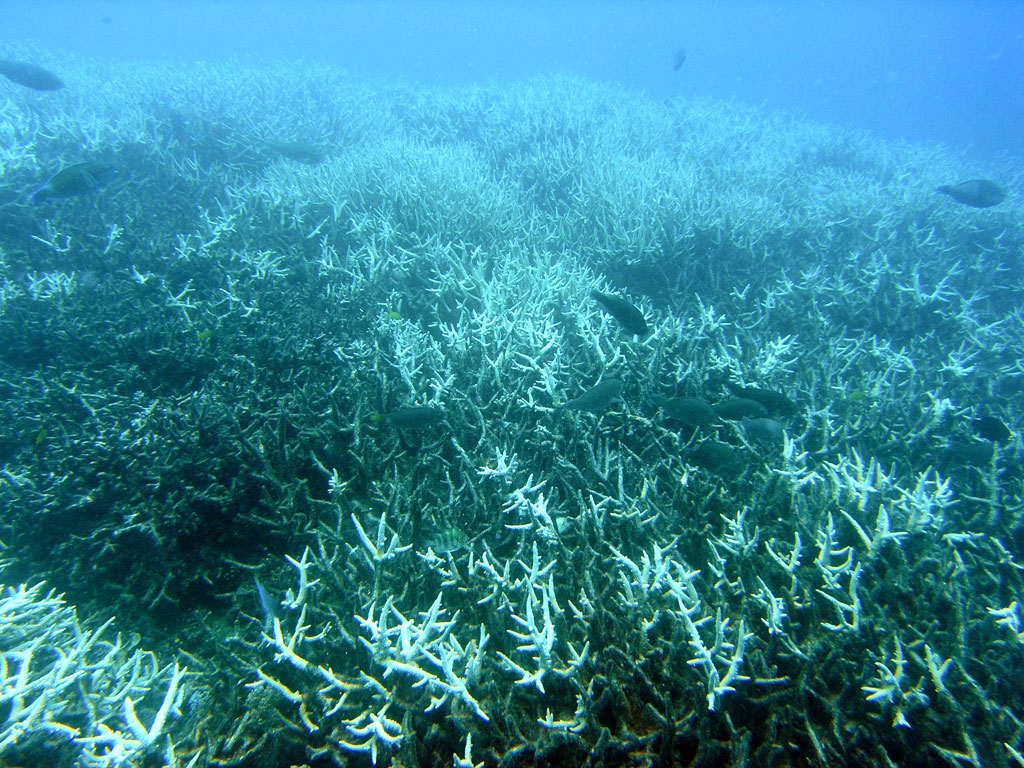
The natural world is similarly struggling to maintain its equilibrium. Forests and coral reefs, which serve as vital carbon sinks, are increasingly compromised by the very conditions they are meant to mitigate. In mangroves, the age of a forest stand is a primary determinant of its carbon storage capacity, yet these ecosystems are under constant threat from shifting temperature ranges and disease. Meanwhile, coral reefs face a more immediate existential crisis. The symbiotic relationship between corals and the algae that sustain them is breaking down under the stress of rising ocean temperatures and acidification. As these reefs bleach and die, the loss of biodiversity and the protective services they provide to coastal communities create a cycle of degradation that is difficult to reverse.
Forests and coral reefs, which serve as vital carbon sinks, are increasingly compromised by the very conditions they are meant to mitigate.
Hidden Mechanisms of Collapse
Beyond the visible changes on land and in the shallows, the deep ocean is undergoing its own transformation. The Atlantic meridional overturning circulation (AMOC) is a critical tipping element, and its stability is tied to complex feedback loops involving salt transport and freshwater budgets. Recent analysis suggests that many climate models may be underestimating the risk of an AMOC collapse because they assume a level of stability that does not account for the destabilizing salt-advection feedback. As the ocean continues to store the vast majority of the energy accumulated in the climate system, our ability to monitor these deep-seated changes is improving, yet the underlying risks remain profound. This is the reality of what some philosophers term a hyperobject: a phenomenon so massively distributed in time and space that it transcends our ability to localize or fully grasp its reach.
The Challenge of Adaptation
Addressing these interconnected threats requires more than reactive measures; it demands a fundamental shift in how we manage the global environment. Agriculture, for example, is caught in a dangerous loop where it contributes to climate change through emissions and land use, while simultaneously suffering from reduced productivity and increased pest pressure caused by that same warming. The path forward involves moving toward sustainable, resilient systems that can withstand a climate that no longer operates within the stable bounds of the past. As experts like Jacqueline McGlade have long emphasized, the interface between science and policy is the most critical frontier. Without global commitment and rigorous, data-driven accountability, the systemic deterioration of these sectors will likely continue to outpace our efforts to mitigate it.