A World in Flux
We are living alongside a phenomenon so vast in time and space that it defies our traditional ways of measuring the world.
The Scale of the Unseen
To grasp the current state of the planet, one must first confront the inadequacy of our perspective. The philosopher Timothy Morton describes climate change as a hyperobject—an entity that exists across such vast stretches of time and space that it cannot be localized. It is not merely a weather event or a temperature spike; it is a pervasive condition that informs every aspect of modern existence, from the styrofoam in our landfills to the carbon cycles of the deep ocean. Because we are inside this object, we struggle to see its boundaries, often mistaking its symptoms for the whole.
Climate change is a hyperobject, a reality so massively distributed that it transcends our ability to pin it to a single place or moment.
Feedback Loops and Fragile Systems
Modern agriculture, the bedrock of human civilization, has become a primary driver of the very instability that threatens it. As the climate shifts, the efficacy of fertilizers wanes, soil erosion accelerates, and the range of pests expands, forcing farmers to clear more land and further intensify the cycle of greenhouse gas emissions. This creates a reinforcing loop where the effort to feed a growing population inadvertently undermines the environmental conditions necessary for that growth. The challenge is no longer just about production; it is about the structural vulnerability of our food systems to a climate that no longer behaves within the parameters of the last century.
Energy policy remains the most critical lever in this equation. While the transition to renewable sources like wind, solar, and hydrogen is underway, the current infrastructure is still tethered to the legacy of fossil fuels. The path forward requires more than just swapping one fuel for another; it demands a fundamental redesign of how we store energy and how we integrate global policy. Without a coordinated, international approach, the gains made in efficiency will continue to be outpaced by the sheer scale of global demand.
Signals from the Periphery
The evidence of this shift is visible in the most remote corners of the globe. In the Middle East and North Africa, the data shows a clear transition: since 1998, the region has moved from a pattern of occasional dryness to one of frequent, severe drought. Traditional indices often failed to capture the full extent of this change, but newer, temperature-inclusive metrics reveal that rising heat is the primary culprit. The landscape is not merely drier; it is fundamentally altered by the relentless pressure of evapotranspiration.
Meanwhile, in the high mountains of Xinjiang, the relationship between glaciers and disaster has shifted. While the number of glacial hazards has decelerated, the nature of these events has grown more volatile. Glacier debris flows, once rare, now pose a persistent threat to mountain highways during the summer months. Even forests, the lungs of the planet, are showing signs of systemic stress. Global assessments of tree mortality indicate that heat and drought are pushing ecosystems toward a breaking point, causing die-offs in regions previously considered resilient.
The earth is speaking in the language of drought, fire, and shifting ice, yet we are only just learning how to read the dialect.
The Ocean as a Ledger
The world's oceans serve as the ultimate repository for the energy imbalance caused by our changing climate. By mapping ocean heat content through the use of Argo floats, researchers have begun to quantify the sheer scale of this thermal absorption. Recent improvements in modeling—accounting for the vertical dependence of heat across different water depths—have allowed for more precise measurements, revealing the depth and breadth of the warming trend. This is not a theoretical exercise; it is a necessary accounting of the energy we have pumped into the climate system.
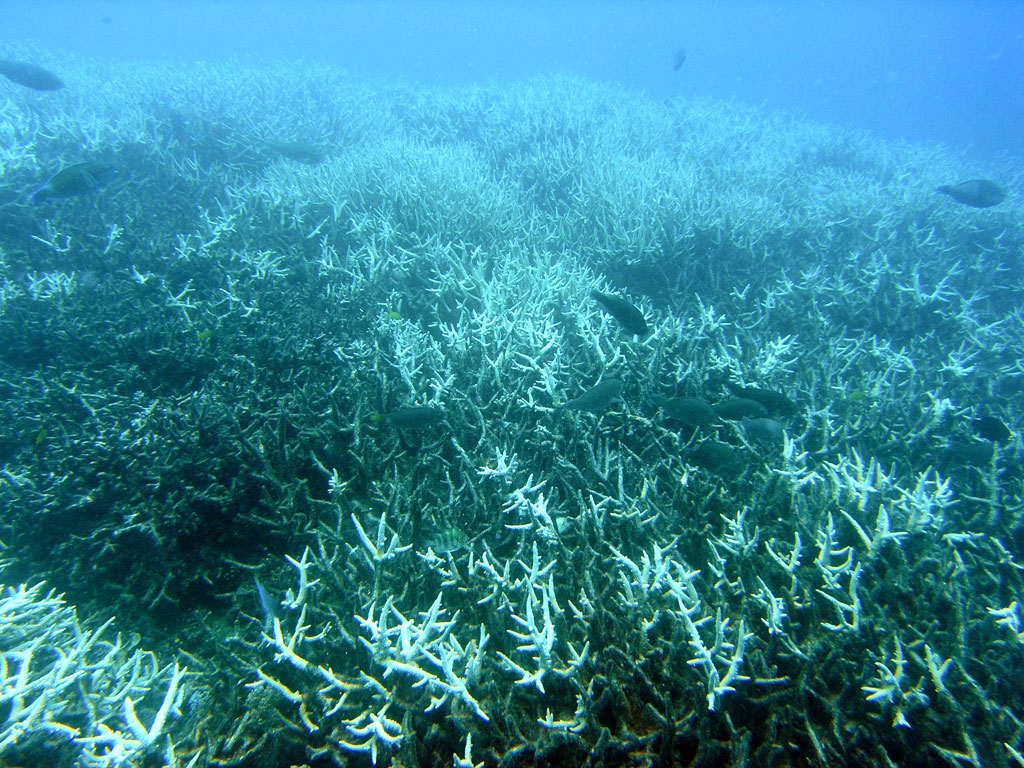
This heat has immediate, devastating consequences for marine life. Coral reefs, which rely on a delicate symbiosis with algae, are increasingly unable to cope with the rising temperatures. When the water warms, the coral expels its symbiotic partners, leading to bleaching and, if the stress persists, death. This is not merely the loss of a beautiful organism; it is the collapse of a foundation species that protects coastal communities and supports vast networks of biodiversity. When the reefs go, the protection they offer against storm surges and the food sources they provide for millions vanish with them.